 1 / 5
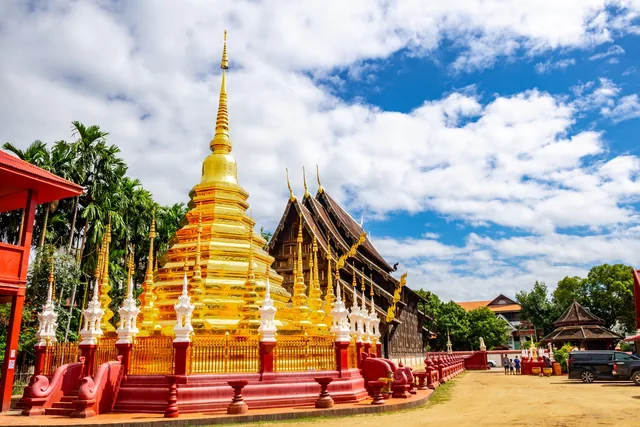
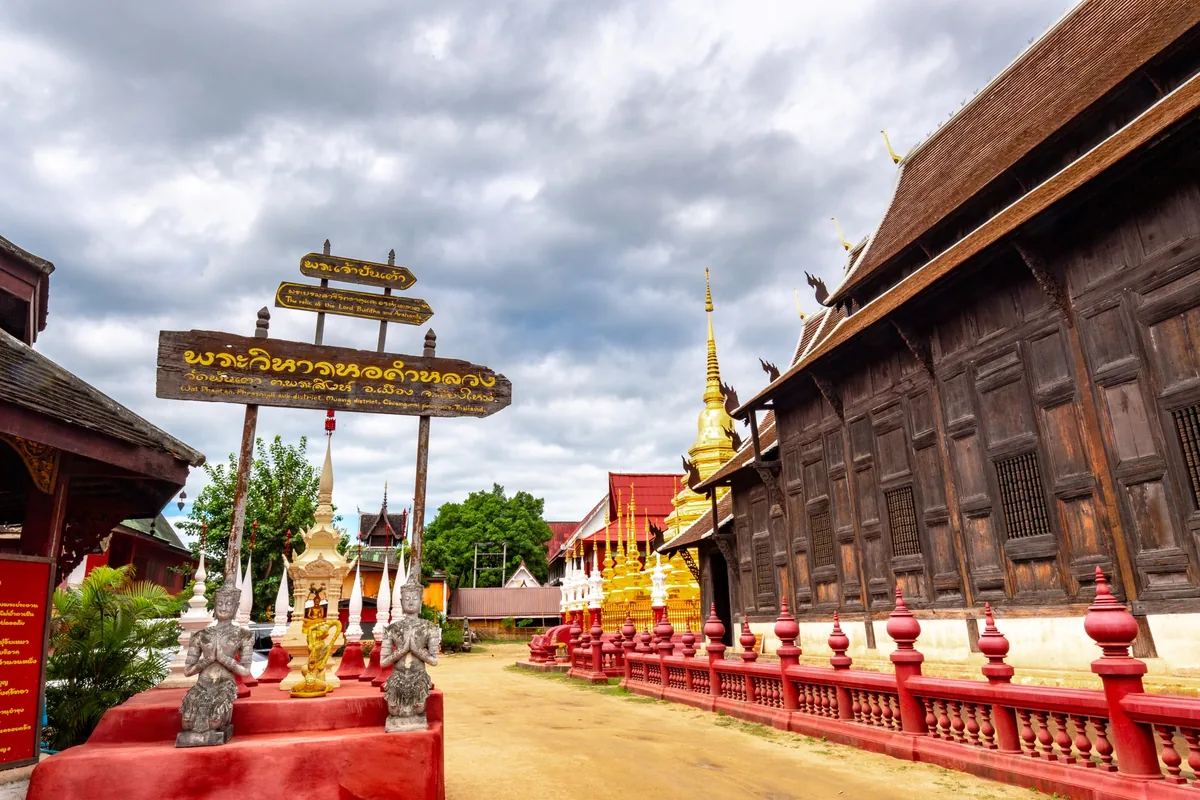
Wat Phan Tao is the small temple with the dark teak hall right next door to Wat Chedi Luang, in the middle of Chiang Mai's Old City. Its wihan is built entirely of teak: it was made as a royal hall in the 19th century and moved to this spot in 1876. Entry is free, it takes half an hour, and most people walk straight past it on the way to its famous neighbour, which is a shame, because it is one of the most rewarding half-hours in the Old City.
Why go
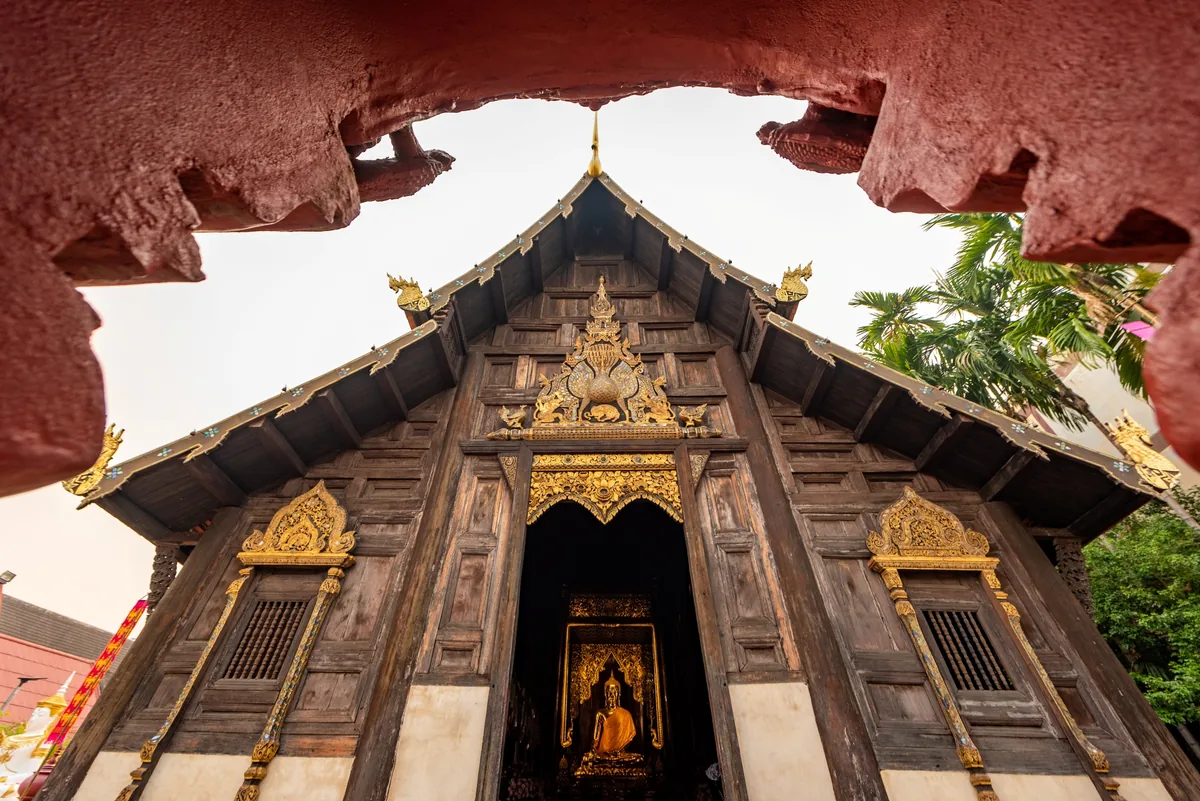
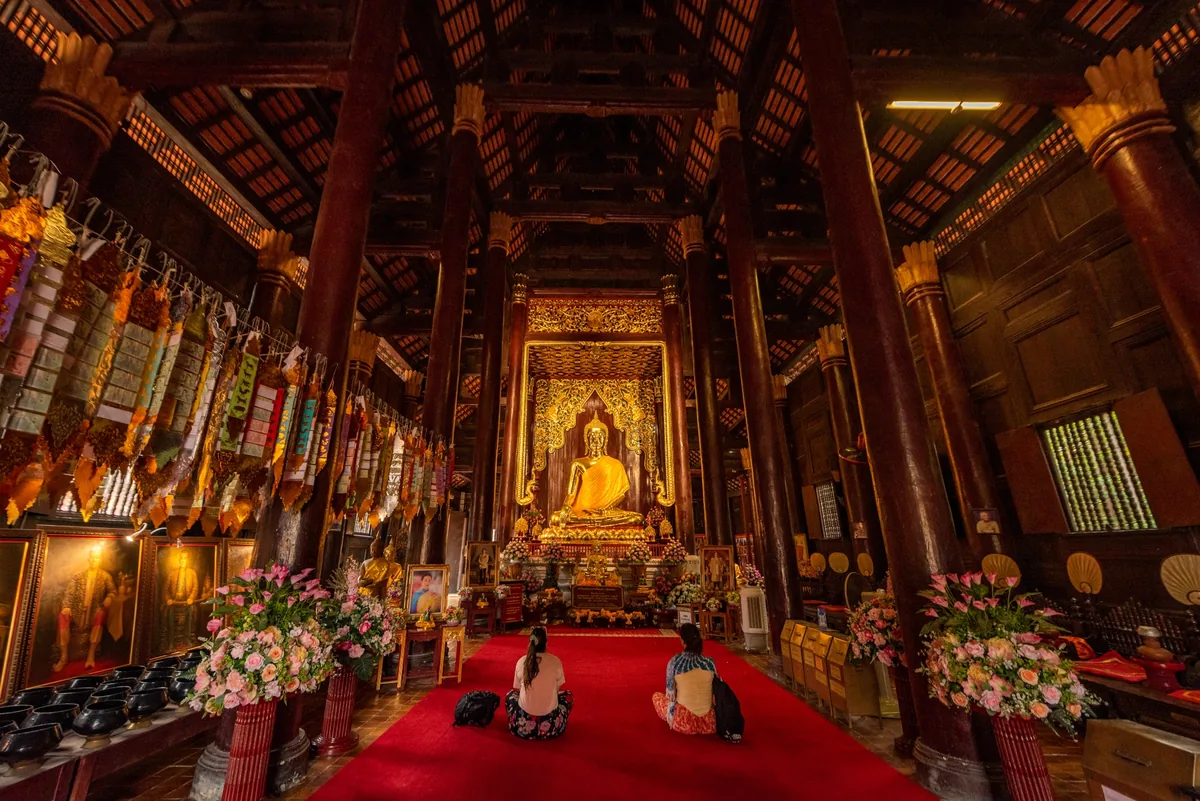
Wat Phan Tao is the best place in the city to see what Lanna wooden architecture feels like. Stone and stucco temples are everywhere in Chiang Mai; a complete teak hall from a royal residence is not. The wood has darkened almost to black with age, and the carved panels, tall columns and dim interior give the hall a warmth that brick temples do not have.
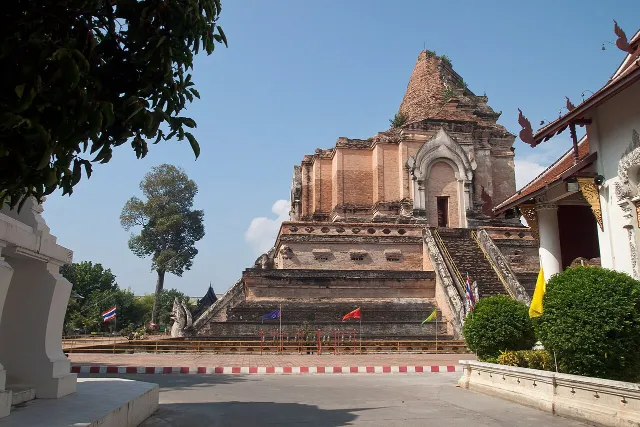
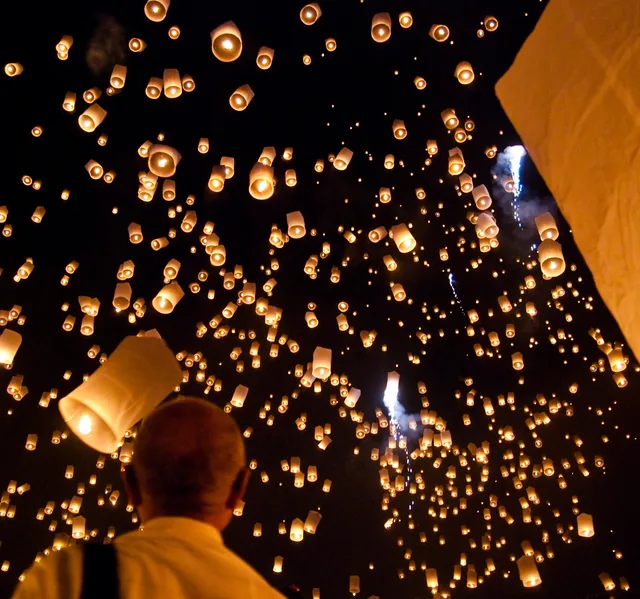
It is also, on a few nights each year, one of the most beautiful places in Chiang Mai: during Yi Peng in November, and again at Visakha Bucha, the grounds are filled with candles and paper lanterns for evening ceremonies. The lantern-lit teak hall, with monks chanting and the great ruined chedi of Wat Chedi Luang rising behind it, is the photograph many visitors come to Chiang Mai for.
What to see
- The teak wihan: look closely at the carved front gable and the wooden panels along the walls before stepping inside. Inside, the columns and roof beams are all original teak.
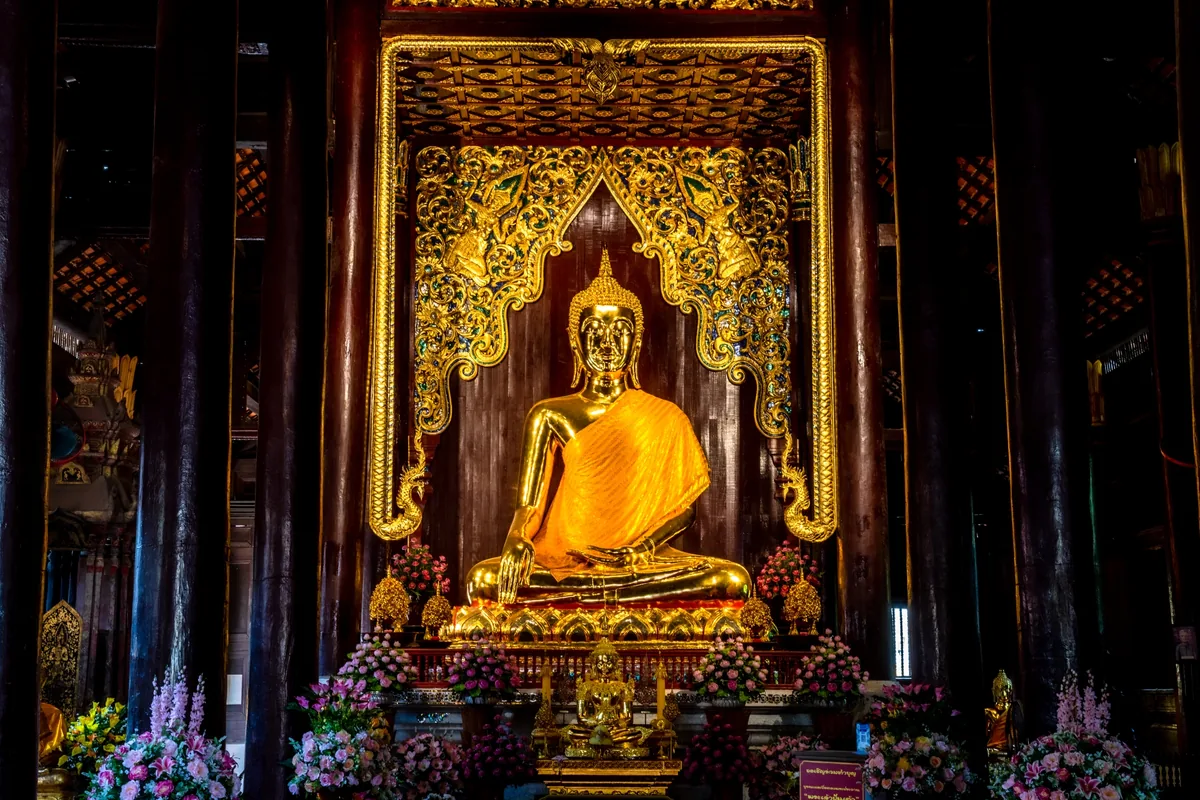
- The Buddha image inside the wihan: the main image sits at the far end of the hall in soft light. It is a calm place to sit for a few minutes.
- The courtyard and garden: small, shaded and usually quiet, with a view through the trees to the chedi of Wat Chedi Luang.
- Yi Peng evenings: the courtyard is decorated with lanterns and candles are lit around the hall. Arrive before dark to find a spot, and keep your voice low during the ceremony.
- Visakha Bucha: a second chance to see the temple lit by candles, on the full moon of the sixth lunar month, usually in May.
How to get there
- From the Old City
- it is in the centre of the Old City, next to Wat Chedi Luang. From most guesthouses inside the moat it is a 5 to 15 minute walk.
- From the airport or Mae Hia
- about 30 minutes by Grab from Mae Hia, depending on traffic. Ask to be dropped at Wat Chedi Luang; the entrance to Wat Phan Tao is a few steps away.
- By songthaew or Grab
- red songthaews and Grab cars cover the Old City at all hours. During Yi Peng the roads around the temple are very busy, so walking the last part is faster.
- On foot
- this is the easiest temple to combine. Visit Wat Chedi Luang next door, then walk to Wat Phra Singh about 10 minutes west.
Tips
- Cover shoulders and knees and take your shoes off before entering the wihan.
- Entry is free. A small donation in the box inside is appreciated and helps maintain the teak.
- Visit in the morning for quiet, or late afternoon when the low sun warms the colour of the wood. The temple closes at 18:00 on ordinary days.
- For Yi Peng, check the dates on our Yi Peng festival page and plan to arrive before sunset. Leave the flash and the drone at home; the ceremony is a religious event, not a show.
- If you are staying in Mae Hia, it is a quiet base 30 minutes away. Spend an evening here at Yi Peng, and another at Wat Phra That Doi Kham, the quieter hilltop temple above Mae Hia, where you can watch the lights of the city from above.
- The 3-day itinerary includes Wat Phan Tao on the Old City temple morning.
FAQ
Is Wat Phan Tao free to visit?
Yes. There is no entrance fee; donations are welcome.
Where is Wat Phan Tao?
In the centre of the Old City, directly next to Wat Chedi Luang.
Why is Wat Phan Tao made of teak?
Its wihan was built as a royal hall in the 19th century and moved here in 1876, keeping its original teak structure.
When is the best time to visit Wat Phan Tao?
Yi Peng evenings in November, when the grounds are lit with lanterns and candles.
How long do I need at Wat Phan Tao?
About 30 minutes, which makes it easy to add to a visit to Wat Chedi Luang.