The best time to visit Chiang Mai is November to February, the cool dry season: clear skies, warm days, cool mornings and the big festivals. Avoid March and April if you can, when smoke from crop burning hangs over the valley. The rainy season, June to October, is green, quiet and cheaper, with showers rather than all-day rain.
That is the short answer. The longer one depends on what you want from the trip. Chiang Mai sits in a valley in the northern mountains, around 300 metres above sea level, with the peaks of Doi Suthep and Doi Inthanon around it. That geography gives it a sharper set of seasons than Bangkok or the beaches: properly cool nights in December and January, a hot and hazy spring, and a long wet season that turns the rice fields around the city bright green. Each has its own reasons to come.
Month by month
| Month | Weather | Crowds | Verdict |
|---|---|---|---|
| January | Cool, dry, clear; cold mornings in the mountains | High | Excellent |
| February | Dry and warming; haze can start late in the month | High | Very good |
| March | Hot, dry, often smoky | Low | Avoid if you can |
| April | Hottest month, smoky until the first rains | Medium, peaks at Songkran | Only for Songkran |
| May | Hot, first storms clear the air | Low | Fair |
| June | Rainy season begins; showers, mostly afternoons | Low | Good value |
| July | Wet and green; rice fields planted | Low | Good value |
| August | Wettest stretch; heavy afternoon rain | Low | Fair |
| September | Wet; occasional flooding near the river | Low | Fair |
| October | Rain easing, air clearing, very green | Rising | Good |
| November | Cool and clear; Yi Peng and Loy Krathong | Very high | Excellent, book early |
| December | Cool, dry and sunny; the coolest nights of the year | Very high | Excellent |
The pattern is simple. Prices and crowds follow the cool season, peaking from late November to the end of January, especially over Yi Peng, Christmas and New Year. The rest of the year the city is noticeably quieter and hotels discount.
Burning season
From roughly March to April, and sometimes from late February, farmers in the north and in neighbouring countries burn fields and forest undergrowth. With no wind and no rain the smoke settles in the Chiang Mai valley. Some days the mountain disappears from view and air quality readings are among the worst in the world.
If your trip falls in this period, check an air quality app each morning and plan around it. Wear a proper mask outdoors on bad days, keep the hardest activities such as the Monk's Trail or long cycle rides for clearer mornings, and choose a hotel with good air conditioning and a pool. Travellers with young children, asthma or heart conditions should seriously consider another month. The first heavy storms, usually in late April or May, wash the air clean almost overnight.
There is one upside: hotels are cheaper and the sights are empty. Indoor attractions, cooking classes and the Night Safari after dark are less affected than mountain viewpoints.
Rainy season
The rains run from about June to October. Despite the name, it rarely rains all day. The usual pattern is a hot, bright morning, clouds building after lunch and a heavy storm in the late afternoon or evening that clears within an hour or two. Plan sights for the morning and keep afternoons flexible.
This is when Chiang Mai is at its greenest. The Mae Hia rice fields are planted in June and July and are bright green by August, and the waterfalls on Doi Suthep and Doi Inthanon are at full flow. Hotels discount, cafes are quiet and you will have temples to yourself on weekdays.
The downsides are real but manageable. Mountain roads can be slippery, some forest trails close for safety, and views from Doi Suthep are often cloudy by mid-morning. September is usually the wettest month for flooding in low parts of the city near the Ping River. If you are riding a scooter, this is the season to be most careful. For things to do on wet afternoons, the Night Safari runs in light rain and the cafes around Mae Hia face the mountain, which is a good place to watch a storm come in.
Festival dates to plan around
Festivals are the main reason to fix your dates early. They fill hotels weeks in advance and push prices up across the city.
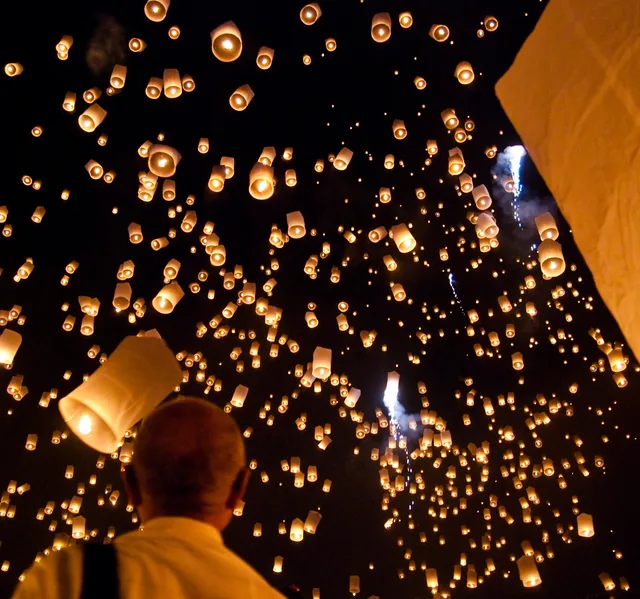
- Yi Peng and Loy Krathong, November: sky lanterns and candle-lit floats on the full moon of the 12th lunar month. The date moves each year; in 2026 it falls on 24 to 25 November. This is the busiest week of the year in Chiang Mai. Book rooms two months ahead.
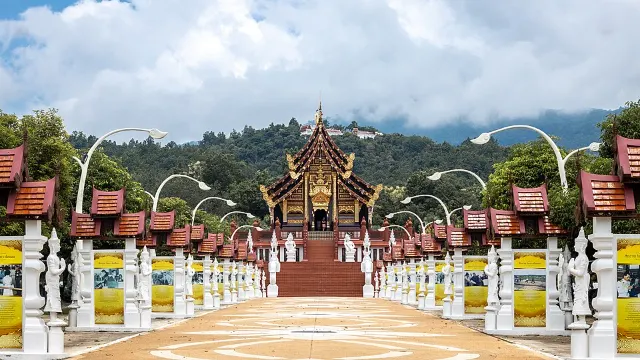
- Royal Park Rajapruek winter flower show, December to February: the gardens at Royal Park Rajapruek in Mae Hia are planted out for the cool season and fill with Thai families on weekends. Hotels on the Mae Hia side book up early.
- Chiang Mai Flower Festival, February: a weekend of flower-covered floats parading through the city, usually early in the month. Dates are announced by the city each year.
- Songkran, April: the Thai New Year water festival in mid-April. The moat around the Old City becomes a three-day water fight. It is fun, loud and wet, and it lands in the hot, smoky season.
- Christmas and New Year: not local festivals, but the peak of the international high season. Prices are at their highest.
If you want the cool weather without the festival crowds, early December and the second half of January are the sweet spots. If you want the festival, book flights and rooms as soon as the date is confirmed. Staying in Mae Hia, by the airport, is a good way to keep a quiet base during busy weeks: rooms there stay bookable longer and the river is about 25 minutes away.
Once you have your dates, the 3-day itinerary shows how to fit the main sights into a short trip in any season.
FAQ
What is the best month to visit Chiang Mai?
December or January, for cool clear days and cold mornings. November is just as good but crowded during Yi Peng.
When is the burning season in Chiang Mai?
Roughly March to April, sometimes from late February, until the first heavy rains clear the air.
Is it worth visiting Chiang Mai in the rainy season?
Yes. Rain usually comes in short afternoon storms, the countryside is green and hotels are cheaper.
When is the Yi Peng lantern festival?
On the full moon of the 12th lunar month, usually in November. In 2026 it is 24 to 25 November.
What is the cheapest time to visit Chiang Mai?
The rainy season from June to September, and the smoky months of March and April, when hotels discount most.