 1 / 2
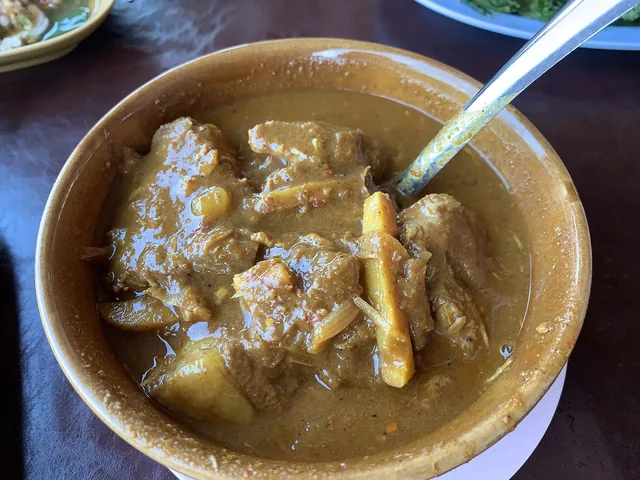
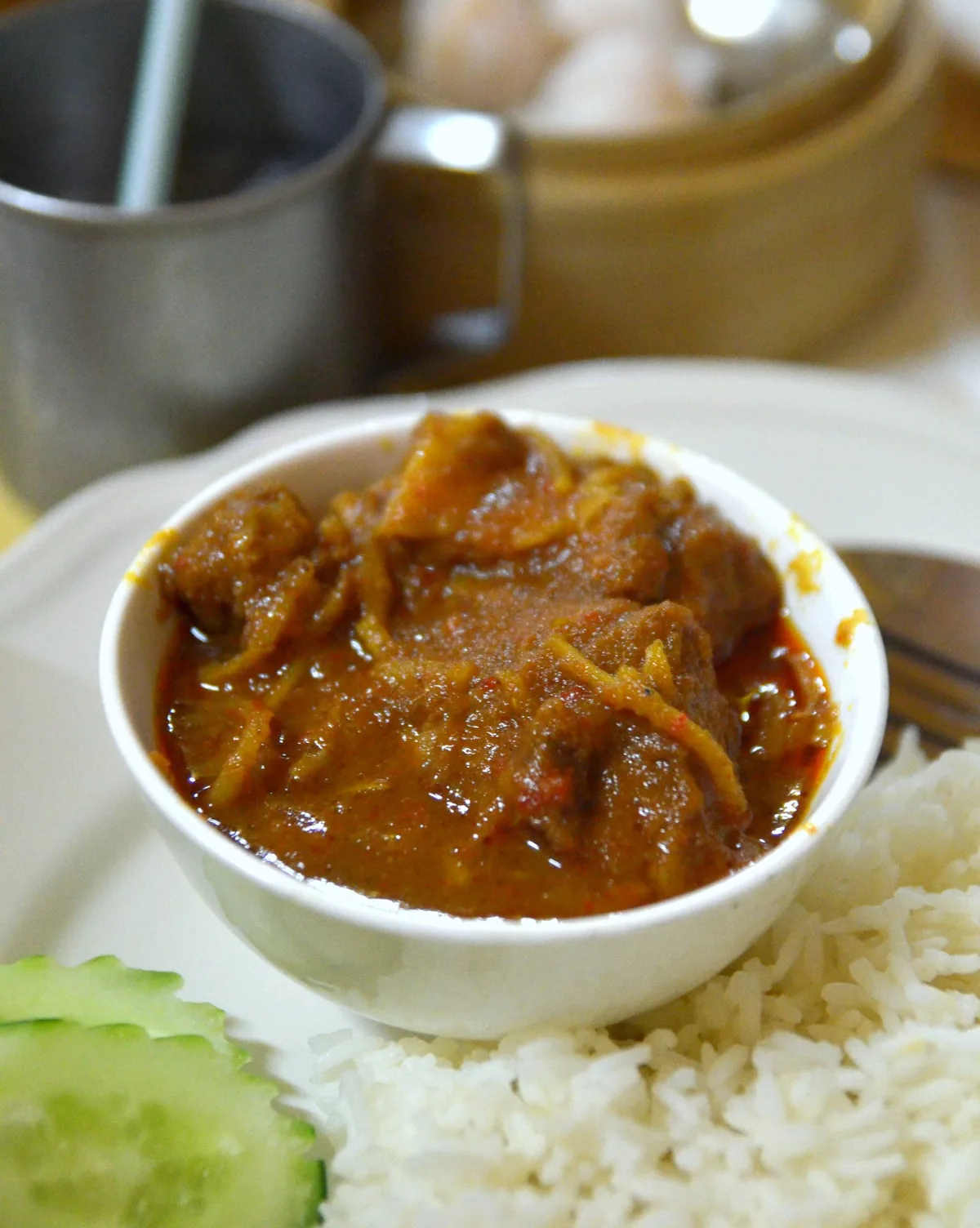
Kaeng hang le is northern Thailand's festive curry: chunks of pork belly and shoulder braised for hours with ginger, garlic, tamarind, palm sugar, peanuts and a dry curry powder until the meat is soft and the sauce is dark, glossy and sweet-sour. It is the curry of temple fairs and merit-making days, and in Chiang Mai you find it at northern restaurants, curry-and-rice shops and morning markets, usually at lunchtime.
What it is
Hang le is a curry with roots outside Thailand. The name and the method are linked to Burma and to the Tai Yai (Shan) people, whose traders and craftsmen lived in Lanna for generations, and the curry powder used to make it carries the warm spices of that tradition. Chiang Mai took the dish in long ago, and today it is as northern as khao soi.
What makes it different from the curries of central Thailand is what is missing: there is no coconut milk. The richness comes from the pork itself. Cooks use cuts with plenty of fat and skin, usually belly and shoulder, marinate them with the curry powder and paste, then simmer them slowly with fresh ginger cut into thin strips, whole garlic cloves, tamarind for sourness and palm sugar for sweetness. Roasted peanuts go in near the end. The long cooking renders the fat into the sauce and turns the meat tender enough to break with a spoon.
The flavour is sweet, sour and gently warm rather than hot. The ginger is the note you remember. Because it takes hours to make well, hang le has always been a dish for occasions: families cook big pots for temple fairs, ordination ceremonies, merit-making and festivals, and share it with everyone who comes.
How to eat it
Hang le is eaten with rice, and in the north that often means sticky rice. Roll a ball of rice and use it to pick up a piece of pork and some sauce, or spoon it over steamed rice if you prefer.
- As part of a rice-and-curry plate: at curry shops, point at the pot and ask for it over rice with one or two other dishes.
- As a bowl at a northern restaurant: order a bowl to share with sticky rice, a dip and vegetables.
- To take away: market stalls sell it in bags, ready to reheat.
It is rich, so it pairs well with something fresh: raw vegetables, a chilli dip or a sour salad. A bowl costs 60 to 150 THB depending on the size and the restaurant.
Where to eat it
Hang le is cooked in big batches, so the best bowls come from places that sell a lot of it every day.
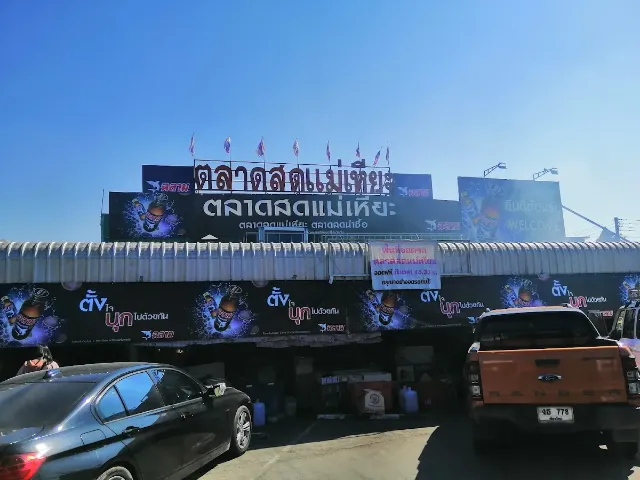
- Mae Hia community market, Mae Hia. The morning market by the airport, 06:00 to 09:00, where curry vendors sell northern curries in bags to take home. Low end of the price band.
- Warorot Market (Kad Luang), near the Old City. The central market, with northern curry stalls and ready-made dishes to take away. Low to middle of the band.
- Curry-and-rice shops across the city. Local shops with a row of pots at the front often have hang le, especially at lunch. Low to middle of the band.
- Northern restaurants in the Old City and Nimman. A bowl to share, served with sticky rice and side dishes. Middle to top of the band.
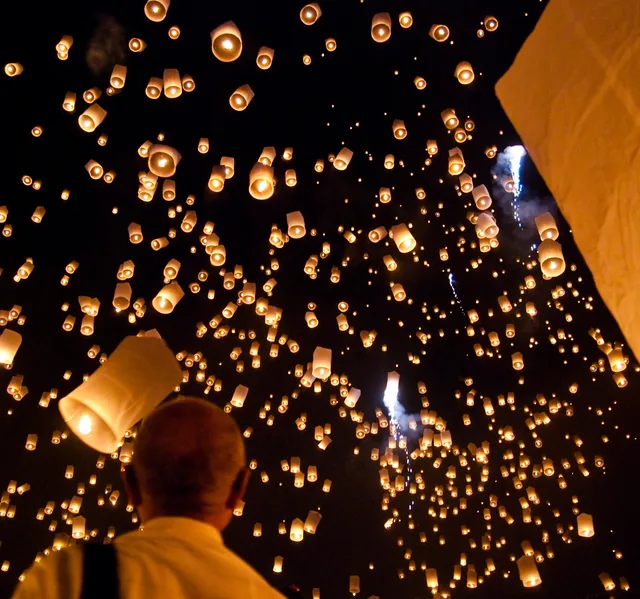
- Temple fairs and festivals. During festival season, including Yi Peng, food stalls around temples often sell hang le. Prices vary.
Other northern dishes to try
If you like hang le, try these next:
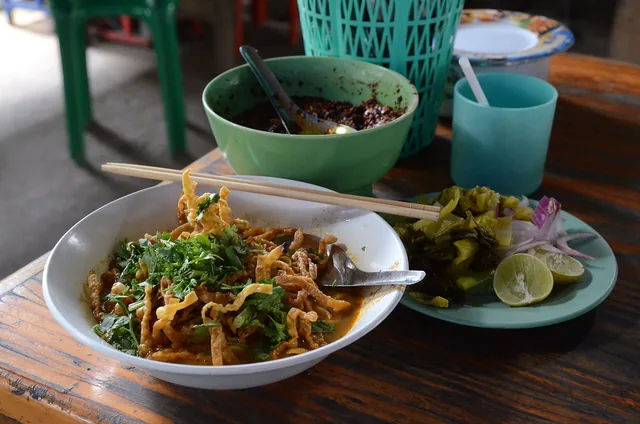
- Khao soi: the city's curry noodle soup, the coconut-rich contrast to hang le.
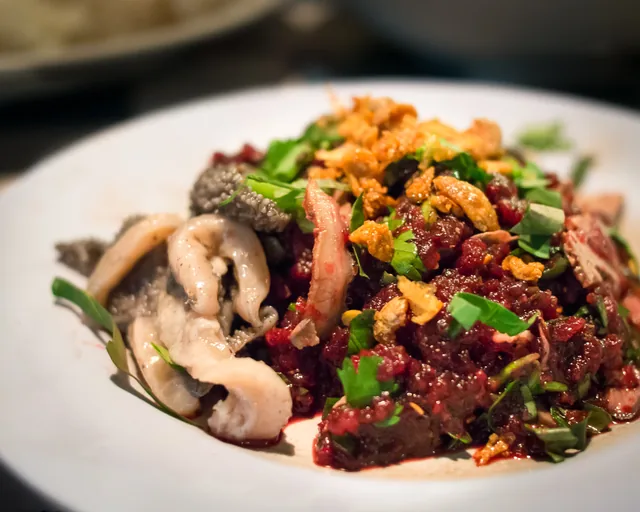
- Larb muang: northern larb with a dark dry-spice mix, often served at the same meals.
- Kaeng khae: a thin, spicy herb curry, the everyday home curry of the north.
FAQ
What is kaeng hang le?
A northern Thai pork curry braised with ginger, tamarind, garlic, peanuts, palm sugar and curry powder, without coconut milk.
Is kaeng hang le spicy?
Not very. It is sweet, sour and warm from ginger and spices rather than hot from chilli.
Where does kaeng hang le come from?
It has Burmese and Tai Yai (Shan) roots and has been part of Chiang Mai cooking for generations.
How much does kaeng hang le cost in Chiang Mai?
Usually 60 to 150 THB a bowl, less at markets and curry shops, more at sit-down restaurants.
When is the best time to eat kaeng hang le?
At lunch, and during festival and temple-fair season, when families cook it in big pots.