 1 / 1
Kaeng khae is the everyday curry of northern Thai homes: a thin, spicy broth crowded with herbs and wild vegetables, cooked with chicken, pork or frog and no coconut milk at all. It rarely appears on tourist menus, which is exactly why it is worth looking for. In Chiang Mai you find it at curry-and-rice shops, northern restaurants and morning markets, best in the rainy season when the greens are young.
What it is
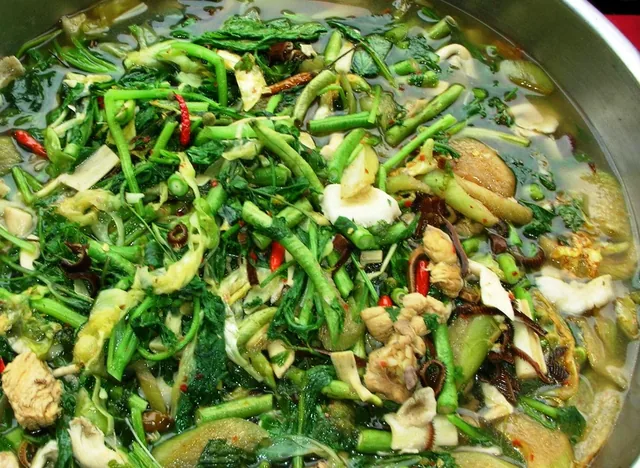
Kaeng khae is less a single recipe than a way of cooking whatever the garden and the forest offer. The base is a simple paste of dried chillies, shallots, garlic, lemongrass and a little shrimp paste, cooked in water rather than coconut milk. Into that go the vegetables, and lots of them:
- Cha-om: the feathery acacia shoots with a strong, savoury smell.
- Pea eggplant: tiny green eggplants that burst with a bitter pop.
- Bamboo shoot: for crunch and a slightly sour note.
- Pumpkin vine tips: soft, sweet young shoots and leaves.
- Wild betel leaf: peppery, glossy leaves and one of the key herbs. The heat itself comes from chilli and often from phak phet (para cress).
Other greens, mushrooms and herbs join depending on the season and the cook. The protein is usually chicken or pork; frog is the classic country version, and you will see it at markets.
The result is green, thin and soupy, with a fresh, bitter, peppery flavour and a clean heat. It is the opposite of a rich coconut curry: light, healthy-tasting and full of texture. The rainy season, May to October, is when the wild vegetables are tender and plentiful, and it is when northern families cook kaeng khae most.
How to eat it
Kaeng khae is eaten with rice, often sticky rice, as one dish in a meal rather than on its own. Spoon the broth and vegetables over rice or dip balls of sticky rice into the bowl.
- At a curry-and-rice shop: point at the pot and ask for it with rice, alongside a milder dish.
- At a northern restaurant: order a bowl to share with a dip, grilled meat and sticky rice.
- From a market: vendors sell it in bags to take home and reheat.
If you find the bitterness unusual, pair it with something mild like nam prik ong or grilled pork. A bowl costs 50 to 100 THB.
Where to eat it
Kaeng khae is home food, so look for places where locals eat, not tourist restaurants.
- Mae Hia community market, Mae Hia. The morning market by the airport, 06:00 to 09:00, with curry vendors selling bags of northern curries and bundles of the same wild vegetables. Low end of the price band.
- Curry-and-rice shops across the city. Local shops with pots on display often have kaeng khae at lunch. Low to middle of the band.
- Warorot Market (Kad Luang), near the Old City. Ready-made northern curries and fresh herbs at the central market. Low to middle of the band.
- Northern restaurants in the Old City and Nimman. Some list it on their menus, often with chicken. Middle to top of the band.
Staying in Mae Hia gives you easy access to the community market, where you can see the herbs that go into the curry before you taste it.
Other northern dishes to try
Kaeng khae belongs to a northern home meal. Try it with:
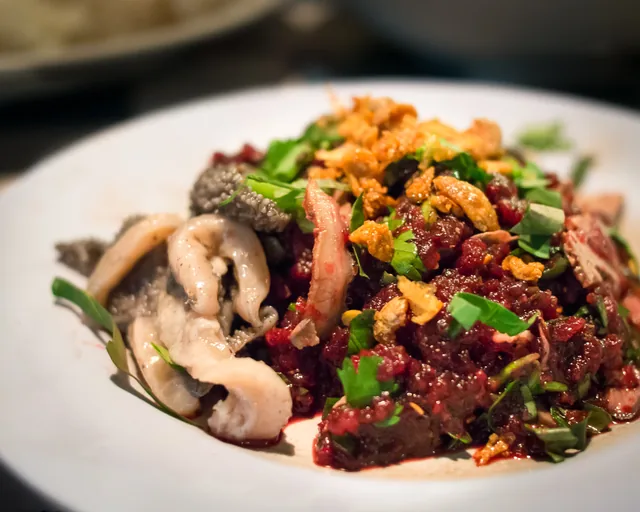
- Larb muang: northern larb with dry spices, another dish built on herbs.
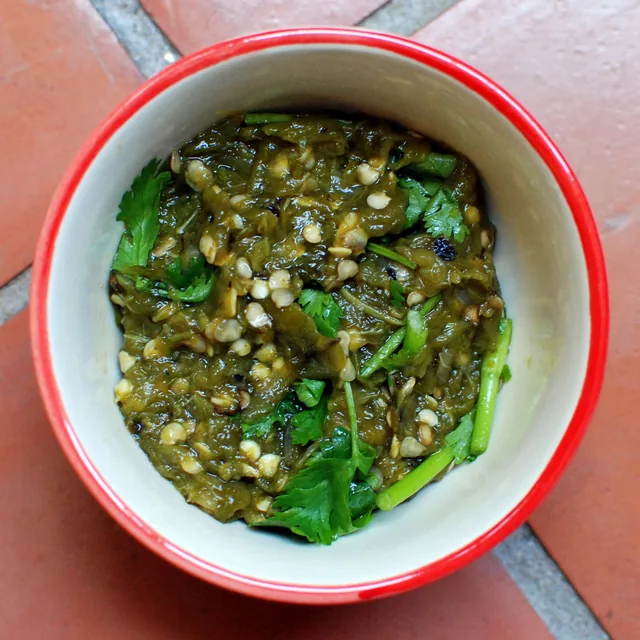
- Nam prik noom: the smoky green chilli dip, always on the same table.
- Kaeng hang le: the festive pork curry, rich and sweet where kaeng khae is light.
FAQ
What is kaeng khae?
A thin, spicy northern Thai curry of herbs and wild vegetables, made without coconut milk.
What vegetables are in kaeng khae?
Usually cha-om, pea eggplant, bamboo shoot, pumpkin vine tips and wild betel leaf, plus seasonal greens.
What meat goes in kaeng khae?
Chicken or pork most often; frog is the traditional country version.
Is kaeng khae spicy?
Yes, medium to hot, with a peppery and slightly bitter flavour.
When is the best time to eat kaeng khae?
The rainy season, when the wild vegetables and herbs are young and fresh.