 1 / 4
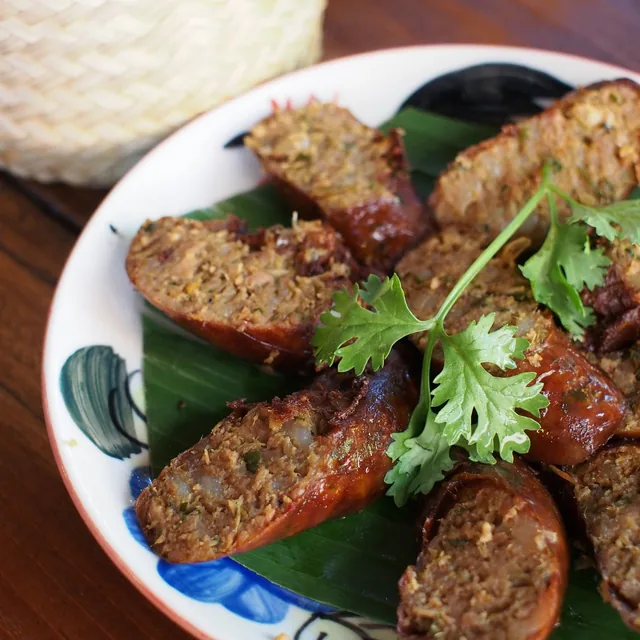
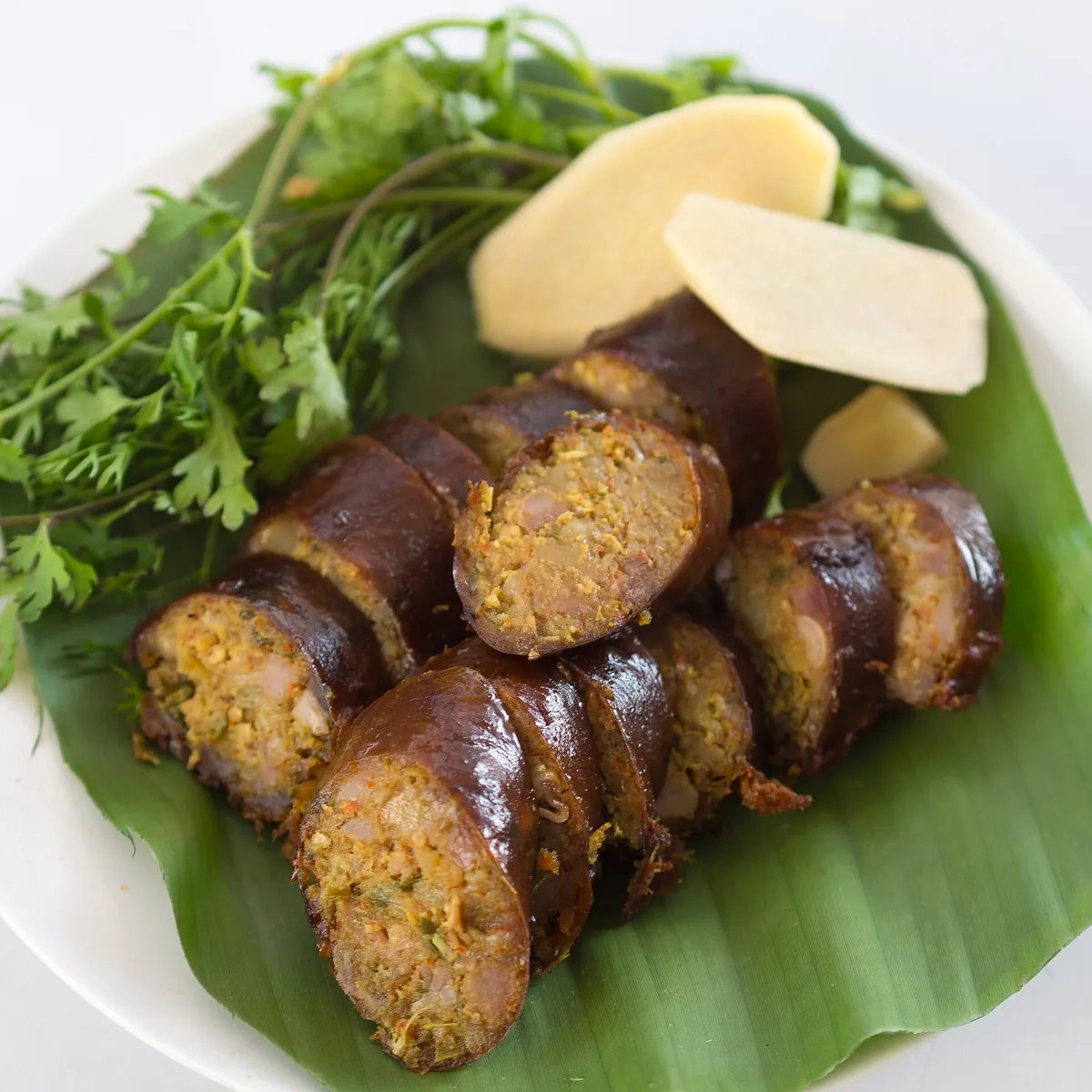
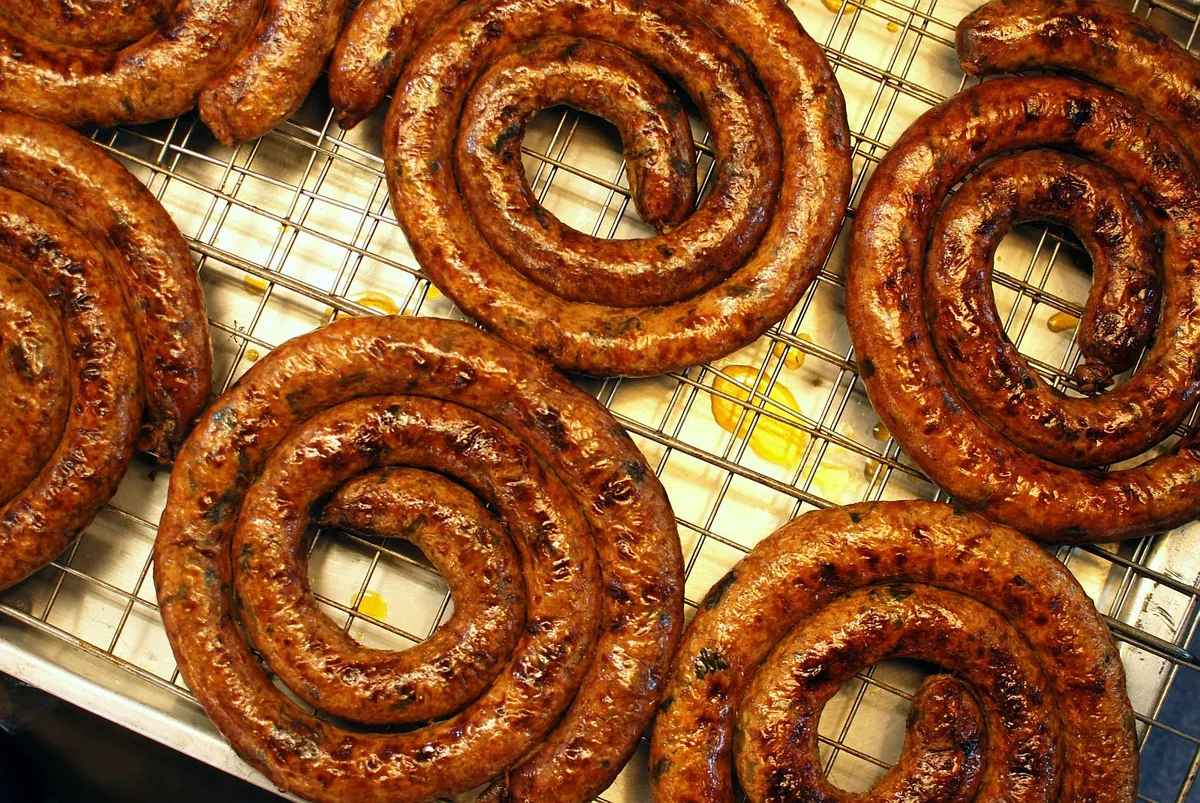
Sai ua is northern Thailand's grilled sausage: coarse pork packed with lemongrass, kaffir lime leaf, galangal, turmeric, shallots and red curry paste, coiled and cooked slowly over charcoal until the skin blisters and the smell fills the market. You will find it at every morning market in Chiang Mai, sold by weight from a grill at the front of the stall, and it is best bought hot between 06:00 and 09:00.
What it is
Sai means intestine and ua means to stuff, so the name simply describes how it is made. What sets it apart from other sausages is the amount of herb in it. Cut a slice and you see it: flecks of green lime leaf, shreds of lemongrass, a yellow tint from the turmeric and red from the curry paste. The meat is chopped rather than finely ground, with some fat left in, so the texture is loose and juicy rather than smooth.
The flavour is fragrant first and spicy second. Most market sai ua has a gentle heat that builds as you eat; some cooks make it hotter, and a few sell a mild version for children. Charcoal does the rest: vendors grill the coils low and slow, turning them on a rack, so the outside chars a little while the inside stays moist.
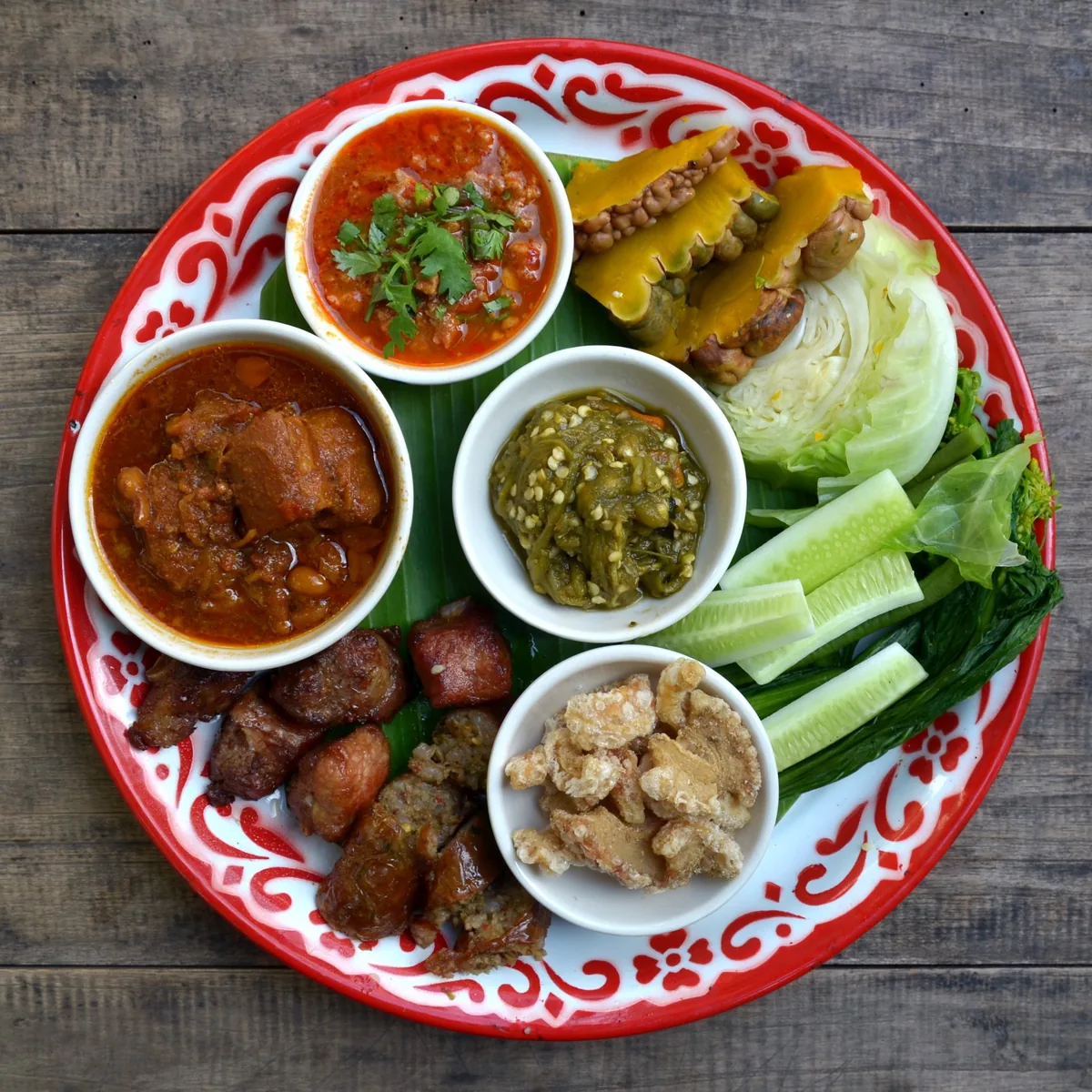
In northern homes sai ua is not a dish on its own. It is one part of a spread, eaten with sticky rice, a chilli dip, raw and steamed vegetables and a pile of pork rinds.
How to order
Sai ua is sold by weight, and prices are usually posted per kilo or per 100 g. Point at the coil, say how much you want, and the vendor weighs it, cuts it into bite-sized slices and bags it. A hundred grams is a good snack for one person; 200 to 300 g with sticky rice and a dip makes a light meal for two.
- Hot from the grill: the best way. Ask for it sliced so you can eat it straight from the bag with your fingers.
- With sticky rice: most sausage stalls also sell small bags of sticky rice, or the stall next door will. Roll a ball of rice, press a slice of sausage into it and eat.
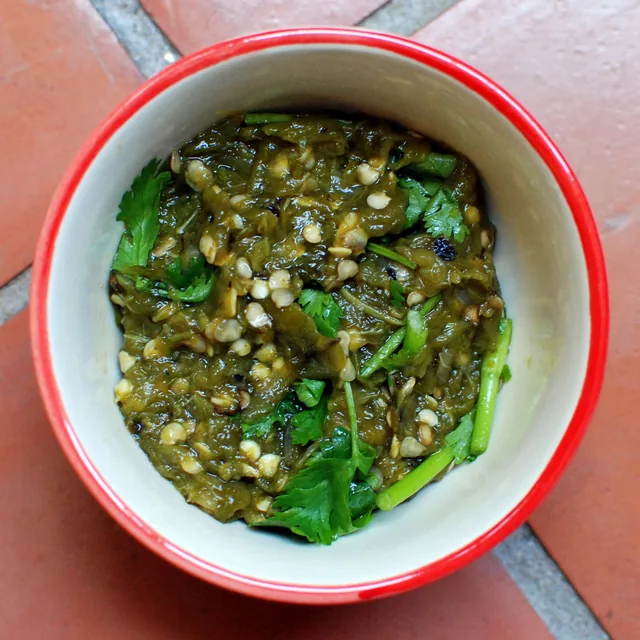
- With nam prik noom: the classic partner. The smoky green chilli dip cuts through the fat of the sausage.
- Fresh or vacuum-packed to take away: many stalls and shops sell uncooked or pre-grilled coils sealed in plastic, one of the easiest edible souvenirs from Chiang Mai. Keep them chilled or in a cool bag, check the date on the pack and ask the vendor how long they keep. Kept cool, vacuum packs travel fine in checked luggage.
Prices sit in a narrow band of 30 to 60 THB per 100 g. Market stalls are at the low end; branded vacuum packs from souvenir shops are at the top.
Where to eat it
Sai ua is everywhere in Chiang Mai, but the morning markets are where it is freshest and cheapest. Go early, because the first batch off the grill is the best one.
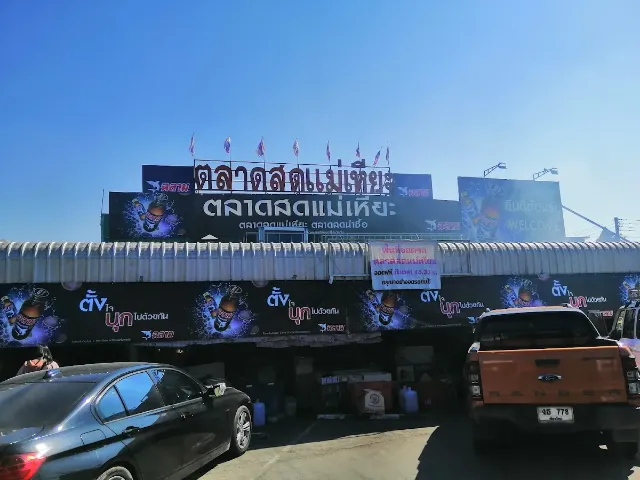
- Mae Hia community market, Mae Hia. The morning market by the airport, 06:00 to 09:00, where local families buy their breakfast. Grilled sai ua sold by weight next to sticky rice and dips. Low end of the price band.
- Warorot Market (Kad Luang), near the Old City. The city's big central market by the Ping River. The ground floor and the streets around it are full of sausage stalls and northern food shops, and it is the easiest place to compare several makers side by side. Low to middle of the band.
- Northern restaurants in the Old City and Nimman. Sit-down restaurants serve sai ua as a plate or as part of a northern set with dips and vegetables. Convenient, but at the top of the band.
- Souvenir and northern food shops. For vacuum-packed coils to carry home. Middle to top of the band.
Staying in Mae Hia puts you a few minutes from the community market, so a bag of hot sai ua and sticky rice can be breakfast before you head into town.
Other northern dishes to try
Sai ua is rarely eaten alone. The same market stalls sell the dishes that go with it:
- Nam prik noom: the smoky green chilli dip that belongs next to every plate of sai ua.
- Nam prik ong: a milder red relish of pork and tomato, good if the green dip is too hot.
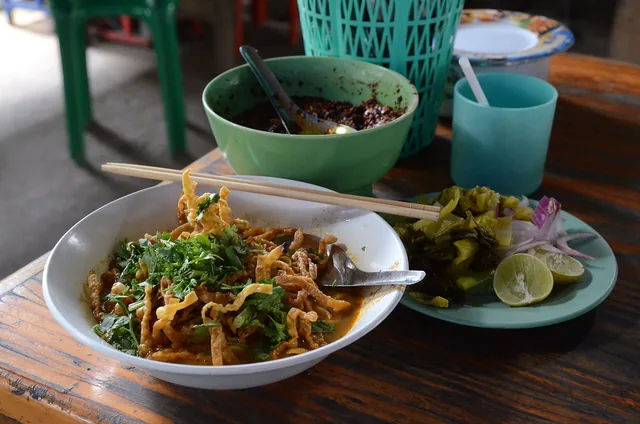
- Khao soi: the city's curry noodle soup, sold at the same morning markets for those who want something hot and filling.
FAQ
What is sai ua?
A northern Thai pork sausage packed with lemongrass, kaffir lime leaf, galangal, turmeric and curry paste, grilled over charcoal.
How much does sai ua cost in Chiang Mai?
Usually 30 to 60 THB per 100 g, cheapest at morning markets and highest for branded vacuum packs.
Is sai ua spicy?
Mildly to medium. It is more fragrant than hot, though some vendors make a spicier version.
Can I take sai ua home as a souvenir?
Yes. Keep vacuum packs chilled or in a cool bag, check the date on the pack and ask the vendor; kept cool, they travel fine in checked luggage.
Where can I buy sai ua near Chiang Mai airport?
At the Mae Hia community market, 06:00 to 09:00, a few minutes from the airport.