 1 / 4
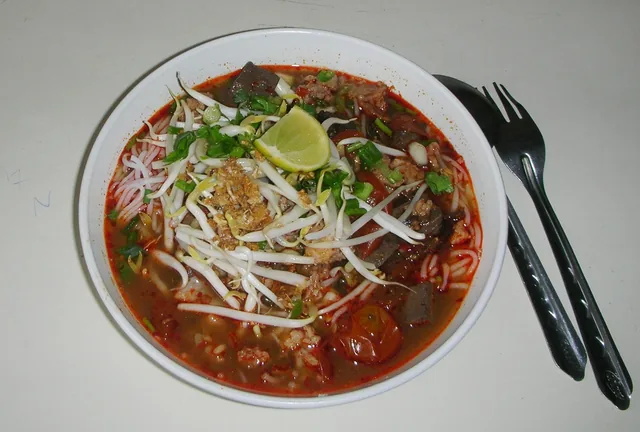
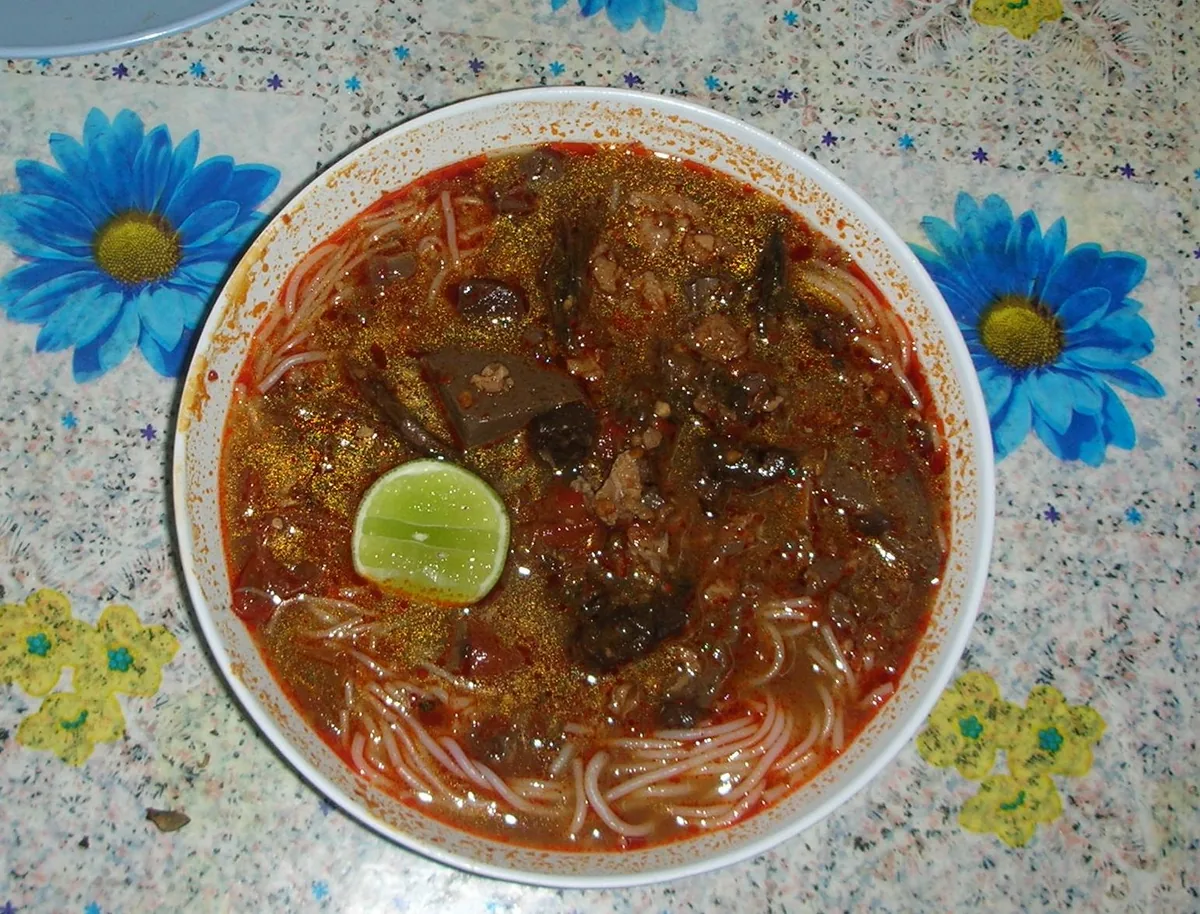
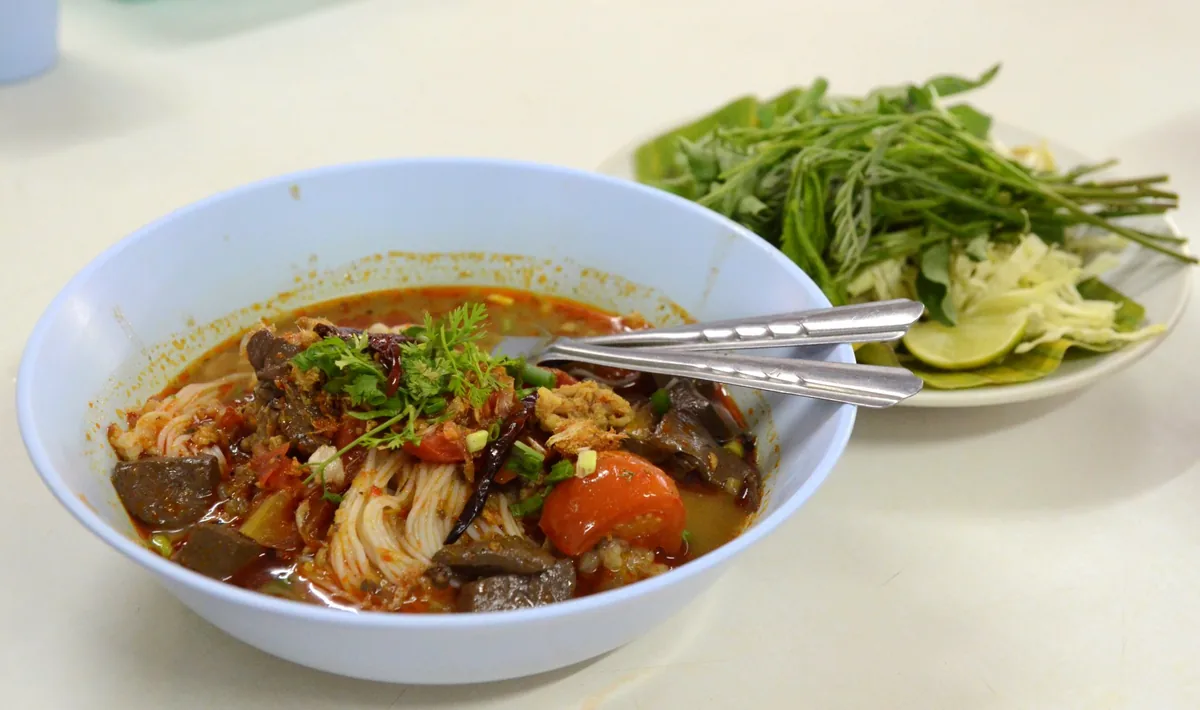
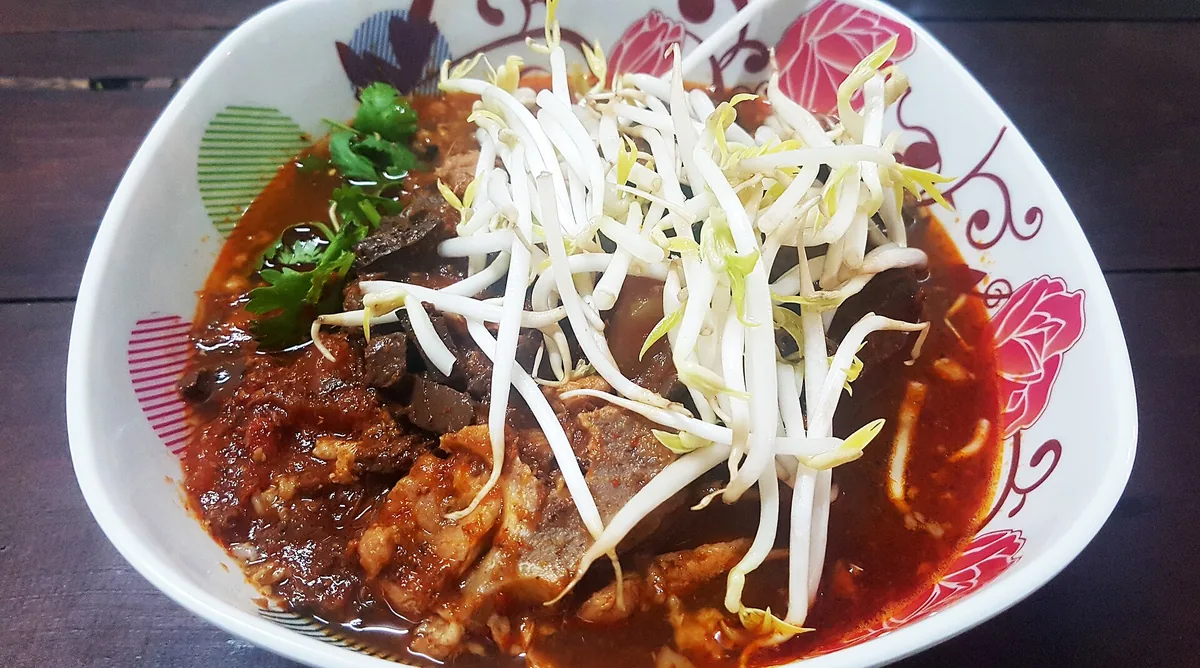
Khanom jeen nam ngiao is the noodle soup northern Thais eat for breakfast: soft fermented rice noodles under a red broth of tomato and pork, with pork ribs, cubes of pork blood and dried kapok flowers, finished with crisp pork rinds and lime. Shops and market stalls across Chiang Mai sell it from early morning, and many have sold out by 13:00.
What it is
Khanom jeen are thin, round rice noodles made from fermented rice, served cool or at room temperature and topped with a hot sauce or broth. Across Thailand they come with many toppings; nam ngiao is the northern one. The name points to its origin: ngiao is the old northern word for the Tai Yai (Shan) people, and the dish came to Lanna with them.
The broth is the heart of it. Cooks make a paste of dried chillies, garlic, shallots and fermented soybean, fry it, then simmer it with pork bones, pork ribs, minced pork and a lot of tomatoes until the broth turns orange-red, savoury and slightly sour. Cubes of set pork blood go in for texture. The ingredient that makes it truly northern is the dried flower of the red kapok tree, dok ngiw: it gives a faint floral note and a soft, chewy bite that you will not find in other Thai soups.
The flavour is mild to medium in heat, tangy from the tomatoes and deep from the pork. It is lighter than khao soi, which is why it works so well as a first meal of the day.
How to eat it
Ordering is simple: most shops serve one dish, and you only choose the size or ask for extra ribs or blood cubes. The work happens at the table, where you finish the bowl yourself:
- Squeeze in lime to brighten the broth.
- Crumble in pork rinds for crunch. They soften in the soup, which is part of the pleasure.
- Add the side vegetables: most shops put out a basket of bean sprouts, shredded cabbage and herbs. Add them raw.
- Adjust the heat with roasted dried chilli or chilli flakes, a little at a time.
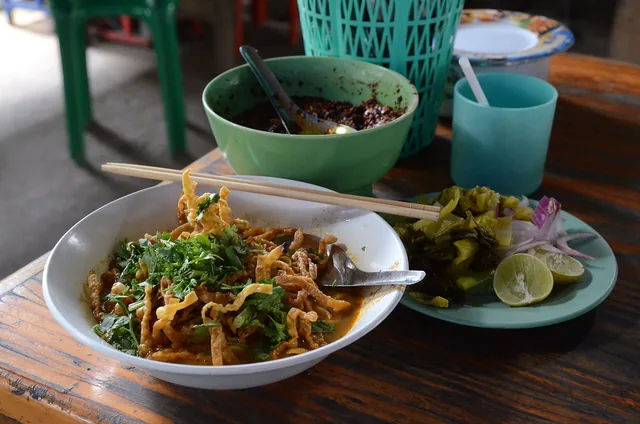
Some people mix the noodles and broth together before eating; others eat from the top down. Use a spoon and chopsticks. A bowl costs 40 to 70 THB.
Where to eat it
Nam ngiao is a morning dish, so go early. These cover the main types of places that serve it.
- Mae Hia community market, Mae Hia. The morning market by the airport, 06:00 to 09:00, where noodle vendors serve local families on their way to work. Low end of the price band.
- Old City noodle shops. Family shops around the moat and near Wat Phra Singh serve nam ngiao from early morning to lunch, which makes it a good breakfast before a temple walk. Low to middle of the band.
- Warorot Market (Kad Luang), near the Old City. Noodle stalls in and around the central market. Low to middle of the band.
- Neighbourhood morning markets. Most fresh markets have a khanom jeen stall with several toppings, nam ngiao among them. Low end of the band.
- Northern restaurants in Nimman. Comfortable, open later, and at the top of the band.
Other northern dishes to try
If you like nam ngiao, try these at the same markets:
- Khao soi: the city's coconut curry noodle soup, richer and heavier.
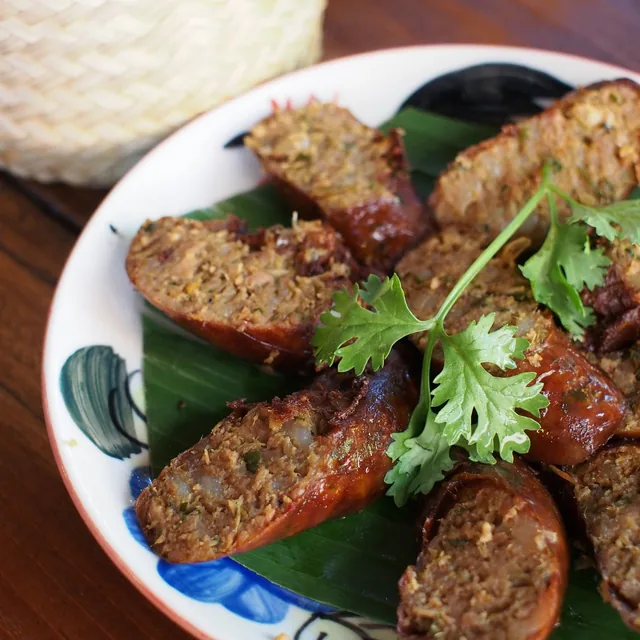
- Sai ua: grilled herb sausage, sold at the same morning stalls.
- Kaeng hang le: the dark pork belly curry, another dish with Tai Yai roots.
FAQ
What is khanom jeen nam ngiao?
Fermented rice noodles in a tomato and pork broth with pork ribs, pork blood cubes and dried kapok flowers.
When do people eat khanom jeen nam ngiao?
Mostly for breakfast and early lunch. Many shops sell out by 13:00.
Is khanom jeen nam ngiao spicy?
Mild to medium. You add dried chilli at the table to taste.
How much does khanom jeen nam ngiao cost?
Usually 40 to 70 THB a bowl.
What are the flowers in nam ngiao?
Dried kapok flowers, dok ngiw, which give a soft chewy texture and a faint floral flavour.